The Non-Toxic Kitchen Audit: 7 Everyday Cooking Items Material Chemists Beg You to Replace
The Non-Toxic Kitchen Audit: 7 Everyday Cooking Items Material Chemists Beg You to Replace
1. Lodge Pre-Seasoned Cast Iron Skillet
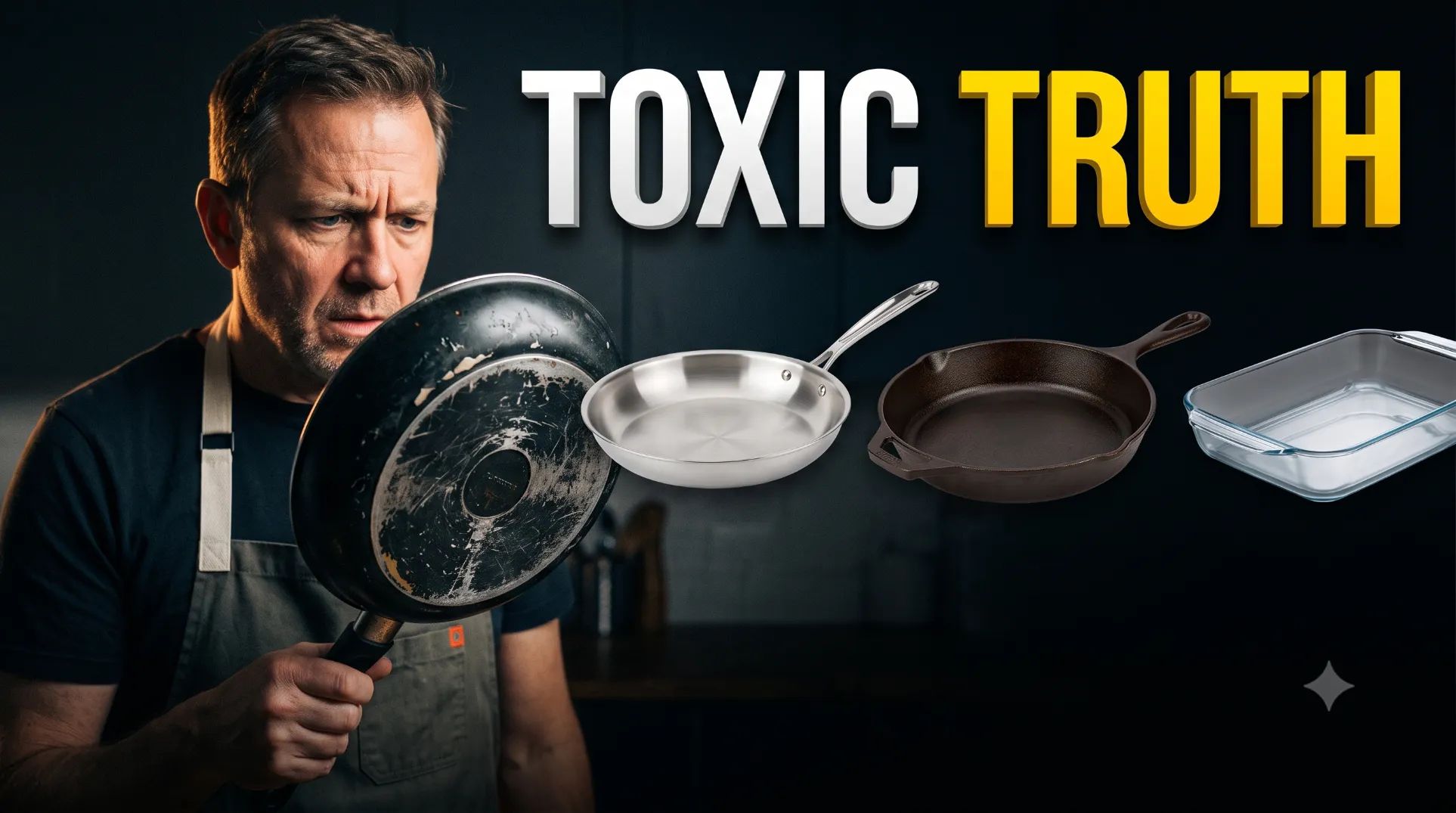
Expensive non-stick fry pans promise effortless morning cooking, but they degrade into toxic fluoropolymer fumes the second your burner hits four hundred degrees. You’re trashing peeling cookware every single year while breathing microscopic chemical breakdown particles right in your home—but…
An independent materials chemist ran thermal stress scans on five popular ceramic-coated skillets last month. What he discovered wasn’t pretty—the proprietary synthetic glaze develops micro-fissures within ninety days of routine cooking, continuously leaching toxic binding agents into sizzling butter, therefore…
Look at this pitted surface cross-section under magnification to see how porous non-stick coatings become. Factory managers spray paper-thin synthetic polymers over flimsy scrap aluminum that warps unevenly on hot burners. The entire disposable pan market relies on rapid structural failure to force continuous repeat purchases.
You don’t need fragile chemical coatings when pure cast iron builds an organic non-stick seasoning that lasts generations. I tagged the certified foundry cast iron skillet on your screen so you can inspect the indestructible American casting yourself. It handles screaming heat without shedding toxic vapors like cookware that’s blatantly—
2. John Boos Block Maple Wood End Grain Chopping Block
Plastic cutting boards feel sanitary and convenient, but they shed fifty grams of microplastics directly into your family’s meals every single year. You’re dulling your kitchen knives on petrochemical polymers while consuming microscopic knife-shaved plastic flakes with every diced onion—but…
A certified food safety microscopist analyzed knife-scarred synthetic cutting boards under polarized light. What she documented wasn’t clean at all—the shredded grooves harbor deep bacterial colonies that survive standard chemical dishwashing, while releasing micro-shards with every knife stroke, therefore…
Look at this high-magnification surface groove to see how jagged plastic fibrils break off during routine meal prep. Cheap polyethylene sheets can’t absorb blade impacts, so your sharp steel edge slices straight through the material. That means your dinner gets seasoned with synthetic polymers every evening.
You shouldn’t sacrifice your gut health for disposable plastic when sustainably harvested end-grain maple naturally neutralizes microbes and heals knife incisions. I tagged the heirloom certified maple chopping block right on your screen so you can inspect the self-healing wood grain yourself. It preserves your edge while ensuring you stop dicing dinner on—
3. Victorinox Fibrox Pro 8-Inch Chef’s Knife
Dull painted chef knives cause eighty percent of kitchen emergency room lacerations while secretly depositing toxic black coating fragments into raw meat. You’re aggressively forcing cheap blades through tough root vegetables because low-grade steel loses its edge within twenty-four hours—but…
A master cutlery technician tested twelve budget supermarket knife sets on an edge-retention dynamometer. His laboratory diagnostic wasn’t subtle—budget manufacturers stamp blades from soft scrap alloys and hide metallurgical flaws behind cosmetic non-stick paints that peel under friction, therefore…
Look at this microscopic blade edge under side illumination to see how the soft metal folds over like wet cardboard. Cheap blades can’t maintain a fifteen-degree bevel, forcing home cooks to apply dangerous downward pressure. The decorative exterior coating flakes directly into food while the blade slips uncontrollably.
You shouldn’t risk severed nerves when commercial culinary kitchens rely on pure high-carbon stainless steel without cosmetic coatings. I tagged the gold-standard professional chef knife right on your screen so you can inspect the laser-tested Swiss geometry yourself. It glides effortlessly through butternut squash so you never prep food with cutlery that’s dangerously—
4. Pyrex Freshlock Glass Food Storage Container Set
Microwaving leftovers in cloudy plastic containers unleashes billions of microplastic fragments and endocrine-disrupting chemicals directly into your dinner within ninety seconds. You think BPA-free labels mean safety, but factory substitutes like BPS migrate even faster when exposed to hot steam—but…
An environmental toxicologist analyzed heated polypropylene food tubs using mass spectrometry last quarter. The laboratory reading wasn’t reassuring—thermal agitation fractures the synthetic polymer matrix, leaching estrogenic plasticizers into hot tomato sauces and oily leftovers at alarming rates, therefore…
Look at this clouded plastic sidewall under backlit microscopy to see thousands of thermal micro-fissures. Every time you reheat stew, heat drives plasticizing chemicals out of the container walls and into your food. Those cloudy white patches aren’t simple stains—they’re degraded plastic pits where material literally dissolved.
You shouldn’t compromise your hormonal balance when tempered borosilicate glass remains completely inert under extreme thermal shifts. I tagged the certified leakproof glass container system on your screen so you can inspect the non-porous culinary glass yourself. It handles screaming oven heat and freezer drops without leaching toxins whenever you’re—
5. GIR Premium Silicone Spatula
Melting nylon spatulas deposit petrochemical fillers and carcinogenic aromatic amines directly into sizzling butter the moment your pan reaches four hundred degrees. You think black plastic turners are heat-safe, but their flimsy molecular chains break down under standard stovetop frying temperatures—but…
A polymer testing engineer performed pinch tests and solvent chromatography on twenty discounted kitchen spatulas. Her laboratory finding wasn’t pretty—unregulated manufacturers cut premium silicone with cheap calcium carbonate and petroleum fillers that leach into oils and crack under intense heat, therefore…
Look at this frayed spatula edge under magnification to see how the plastic tip liquefied and eroded into food. When you twist cheap silicone, it turns chalky white because bulk fillers displace pure siloxane polymers. That means your skillet’s high heat dissolves chemical additives straight into your scrambled eggs.
You shouldn’t stir boiling food with plastic when seamless pharmaceutical-grade silicone withstands five hundred degrees without leaching. I tagged the certified unibody silicone spatula right on your screen so you can inspect the indestructible fiberglass core yourself. It won’t ever melt or peel when you’re—
6. Clearly Filtered Water Pitcher with Affinity Filtration
Standard water filter pitchers create a dangerous illusion of purity while leaving heavy metals, pesticides, and forever chemicals untouched in your drinking glass. You think black carbon mesh purifies tap water, but it only masks chlorine taste while ignoring hazardous microscopic neurotoxins—but…
An environmental water quality analyst conducted laboratory mass spectrometry on three big-box filter cartridges. What he documented wasn’t clean—basic granulated carbon quickly channels water through hollow paths, failing to capture dissolved lead and PFAS, while turning into a damp microbial incubator, therefore…
Look at this cutaway filter cartridge to see the loose carbon granules that allow contaminated tap water to bypass filtration entirely. Big brands use thirty-year-old carbon sieve tech that does nothing against modern industrial pollutants. You’re simply drinking carbon-dusted tap water laced with persistent fluorinated compounds.
You shouldn’t drink contaminated tap water when multi-stage affinity filtration strips over three hundred toxic contaminants. I tagged the laboratory-certified filtration pitcher right on your screen so you can inspect independent lab tests yourself. It eradicates lead and microplastics that bypass filters that are merely—
7. Secura Double Wall 100% Stainless Steel Electric Kettle
Boiling fresh water in designer electric kettles exposes your morning tea to millions of microplastics and toxic plasticizers. You think sleek glass bodies protect you, but concealed internal plastic level gauges and glued silicone gaskets continuously bathe in rolling two-hundred-degree steam—but…
An appliance teardown engineer dismantled eight top-rated rapid-boil kettles inside an analytical lab. His forensic discovery wasn’t reassuring—cheaper brands use hidden polypropylene brackets and industrial adhesives directly along boiling water paths, releasing degraded oligomers into hot water with every boil cycle, therefore…
Look at this eroded silicone seal and brittle plastic window gauge beneath the spout housing. When boiling water circulates, these synthetic parts shed volatile compounds directly into your drink. That chemical odor isn’t harmless factory dust—it’s plasticizing solvent outgassing into your water.
You shouldn’t steep microplastics into your clean organic tea when a seamless stainless steel interior guarantees zero plastic contact. I tagged the double-wall food-grade stainless electric kettle right on your screen so you can inspect the unibody interior yourself. It keeps water pure and hot without the toxic leachate released when you’re—